
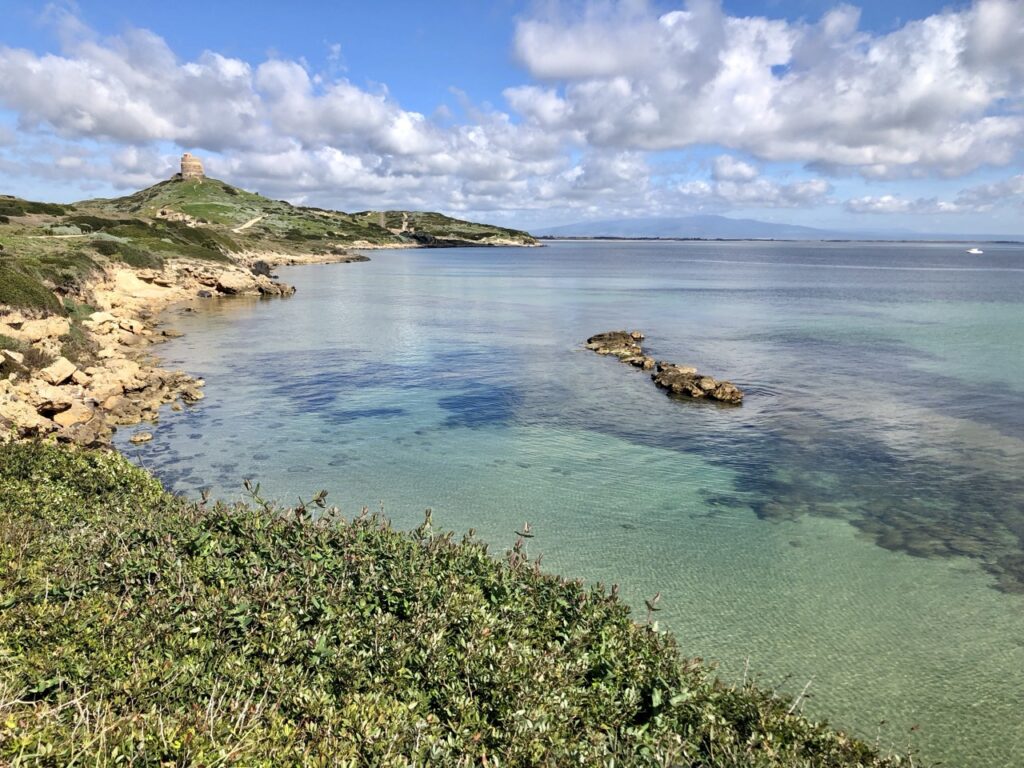
A few kilometres from the campsite opens the Sinis Peninsula, A strip of land on the west coast of Sardinia that faces the sea without filters. It is a territory made up of ponds, fields, constant wind and very different beaches.
The Sinis is not just a seaside destination; it is one of the most historically and archaeologically important areas on the island. Here, traces can be found from the Nuragic civilisation right through to the Phoenicians and Romans. It is one of those places where landscape and history coexist without the need for forced explanations.
From Is Arutas to San Giovanni: the beaches of Sinis
Obviously, one of the best-known elements of this area is the sea. Among the most famous beaches is Is Arutas, and the reason becomes clear as soon as you arrive. Instead of sand, there are small grains of quartz, smoothed by the sea, which create an almost compact effect underfoot.
The water is clear, cool on the skin, with a sandy seabed that then gives way to rocks, where it is easy to spot small fish.
Immediately after Is Arutas, Mari Ermi It has similar characteristics but a more tranquil atmosphere. Here too, the beach is made of quartz, but it's wider and, at certain times of the year, less crowded. Behind it lies a lake of about twenty hectares, much loved by birdwatchers. Here, various species of aquatic birds live, including the pink flamingo.
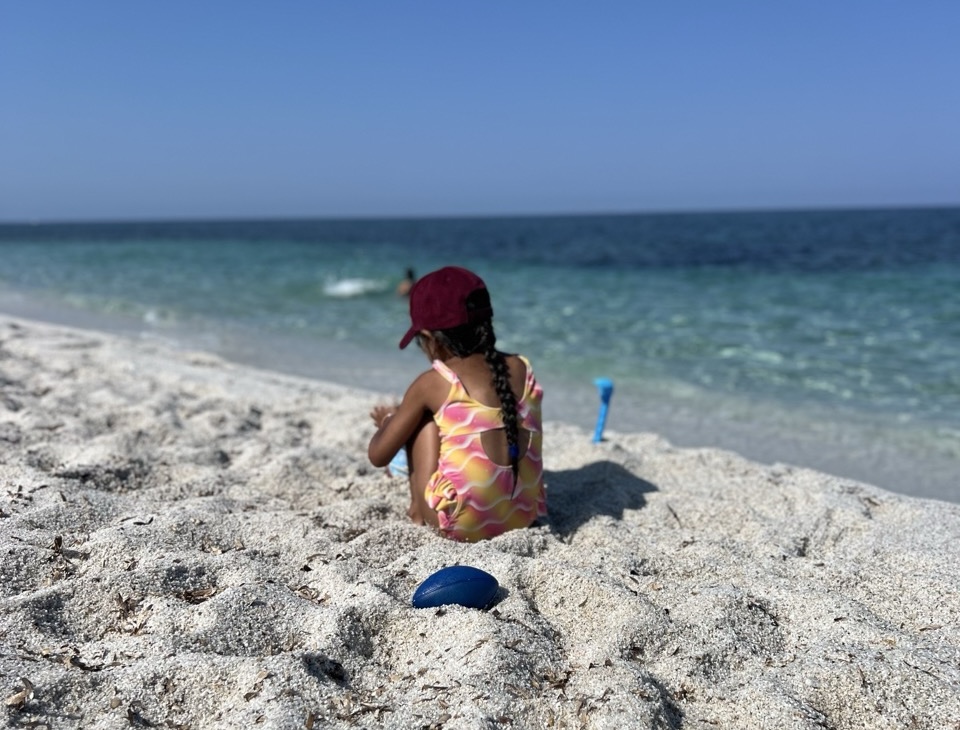
Maimonides It is perhaps the most essential of the three. Light sand mixed with quartz, rocky stretches along the shore, and very few structures. The sea is clear, with shades that change from turquoise to deeper blue. Here, as along this entire coast, it's wise to be cautious when the mistral wind blows, as it can create significant waves. It's no coincidence that it's a favourite beach for kitesurfers and windsurfers.
Finally, the beach of San Giovanni di Sinis, where the landscape changes. The sand becomes finer and golden, and we are right on the tip of the peninsula. The village divides the sea into two: on one side, the open sea, which is choppier on windy days; on the other, the so-called “dead sea,” more sheltered and generally calm, within the cove on which the ancient city of Tharros also overlooks.
A land that tells its story
The Sinis is a territory that preserves very concrete traces of its past, visible and accessible without great detours.
In Cabras, the Civic Museum Giovanni Marongiu Tell the story of Tharros, its strategic importance in the Mediterranean, and it holds one of the most relevant testimonies of Nuragic Sardinia: the Giants of Mont'e Prama. These are stone statues, up to two metres tall, depicting warriors, archers and boxers.
Their place of origin is Mont'e Prama, an open-air area of the Sinis, essential, where remains of tombs and other sculptural fragments have also emerged. It is not a spectacular site in the most immediate sense, but with a guided tour it is easier to understand the context in which these statues were made and their significance.
Not far away is San Salvatore di Sinis, a village where time seems to have stood still. Today, it is mainly inhabited during the summer months and is also known for its almost cinematic atmosphere, as several spaghetti westerns have been filmed here. The small church, however, houses a less visible element, an underground chamber dug into the rock, used as a place of worship as early as the Nuragic period and transformed over the following centuries.
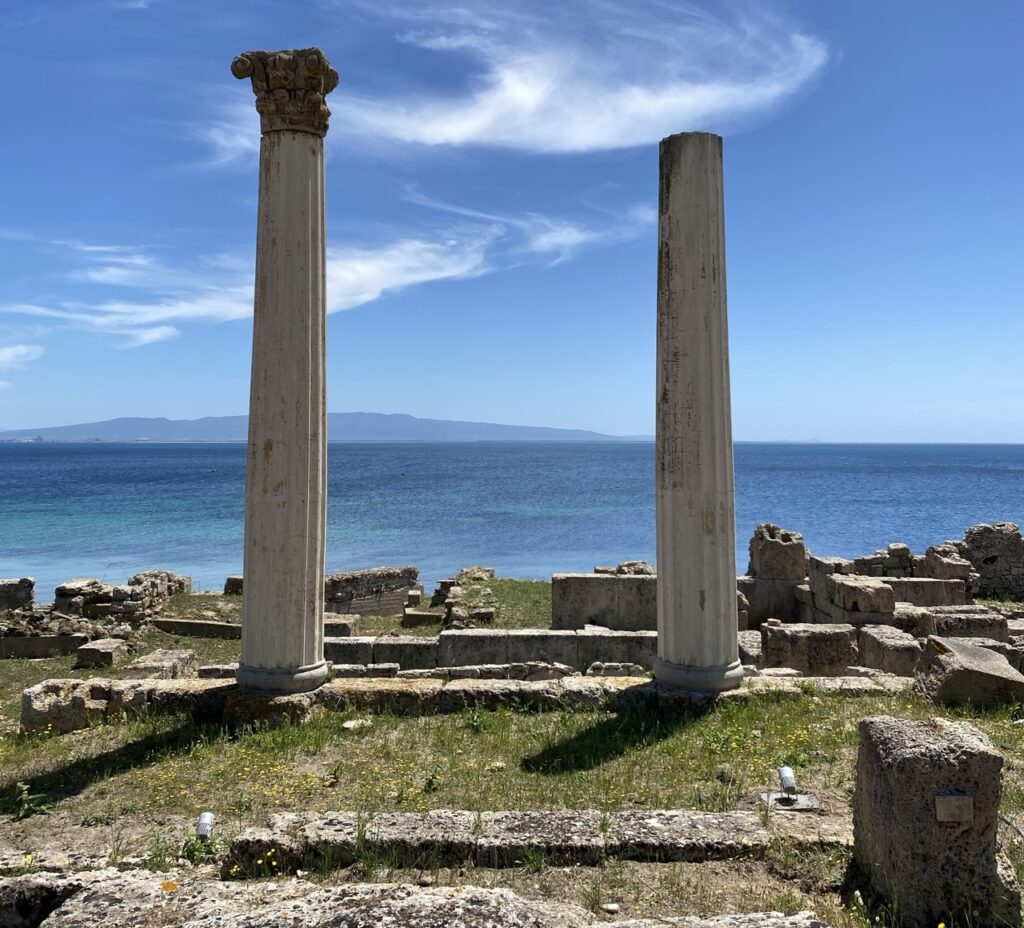
Finally, the ancient city of Tharros, Founded by the Phoenicians and developed by the Romans. During your visit, you will walk among streets, columns, and structures that directly overlook the sea. It is one of those places that concretely demonstrates the role this coast played in connections and exchanges in the Mediterranean.
Pisa outdoors: all outdoor activities to do
The Sinis is a territory that lends itself well to slow exploration, alternating more active moments with periods without any plans.
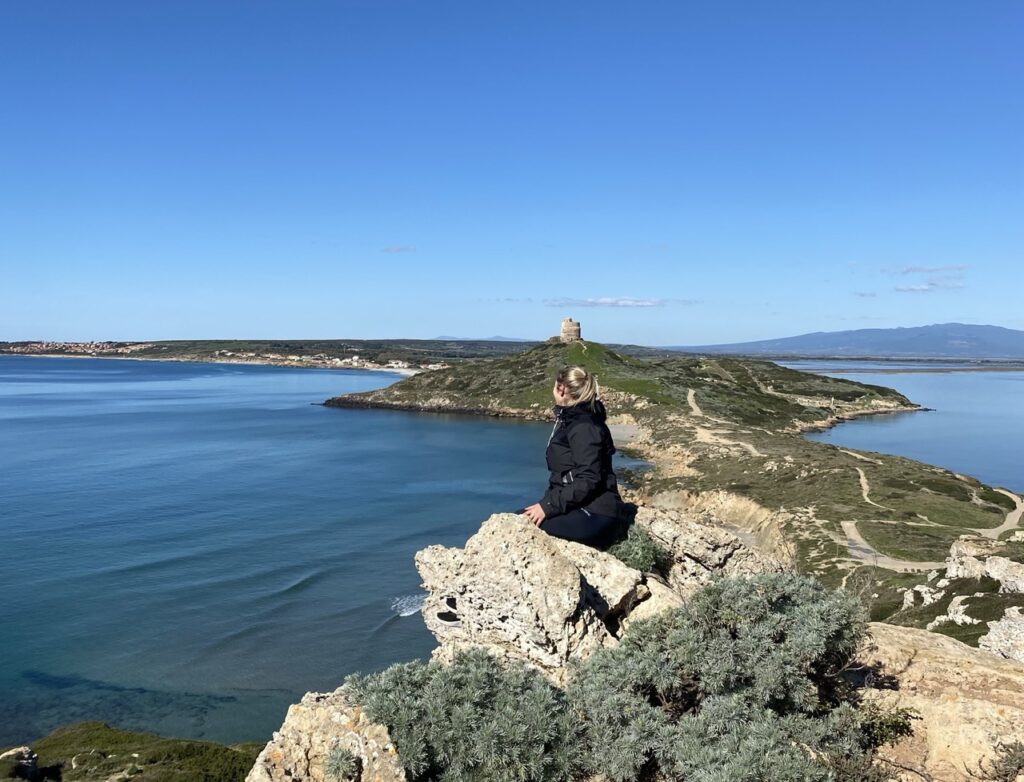
Walking or cycling it's one of the best ways to cross it. The paths are mostly simple and allow you to come into direct contact with the landscape, with ponds, fields and wilder stretches of coast. You can reach, for example, Cape San Marco, with its lighthouse overlooking the sea, or crossing more natural areas like the’Seu Oasis, a former hunting reserve dominated by a tower, Turr’e Seu, from which the area takes its name. You will walk among myrtle, mastic, rosemary and dwarf junipers, while in the sandy stretches it will not be difficult to spot sea lilies. In the midst of the greenery, it is possible to spot partridges, larks, and birds of prey such as buzzards, as well as tortoises, foxes, and wild rabbits.
The wind in Sinis is a constant presence, making the area particularly suited to watersports. On the right days, you'll see sails of Kitesurf e Windsurf move along the coast, but you could also choose quieter alternatives for experiencing the sea, such as SUP e Kayak, depending on how you prefer to experience the sea.
Another way to discover the Sinis is by sea. With a’Boat trip This allows you to observe the coastline from a different viewpoint, reach less accessible stretches, and better understand the shape of the peninsula. These are simple activities that don't require major organisation and slot easily into your days, leaving you with space to decide what to do as you go.